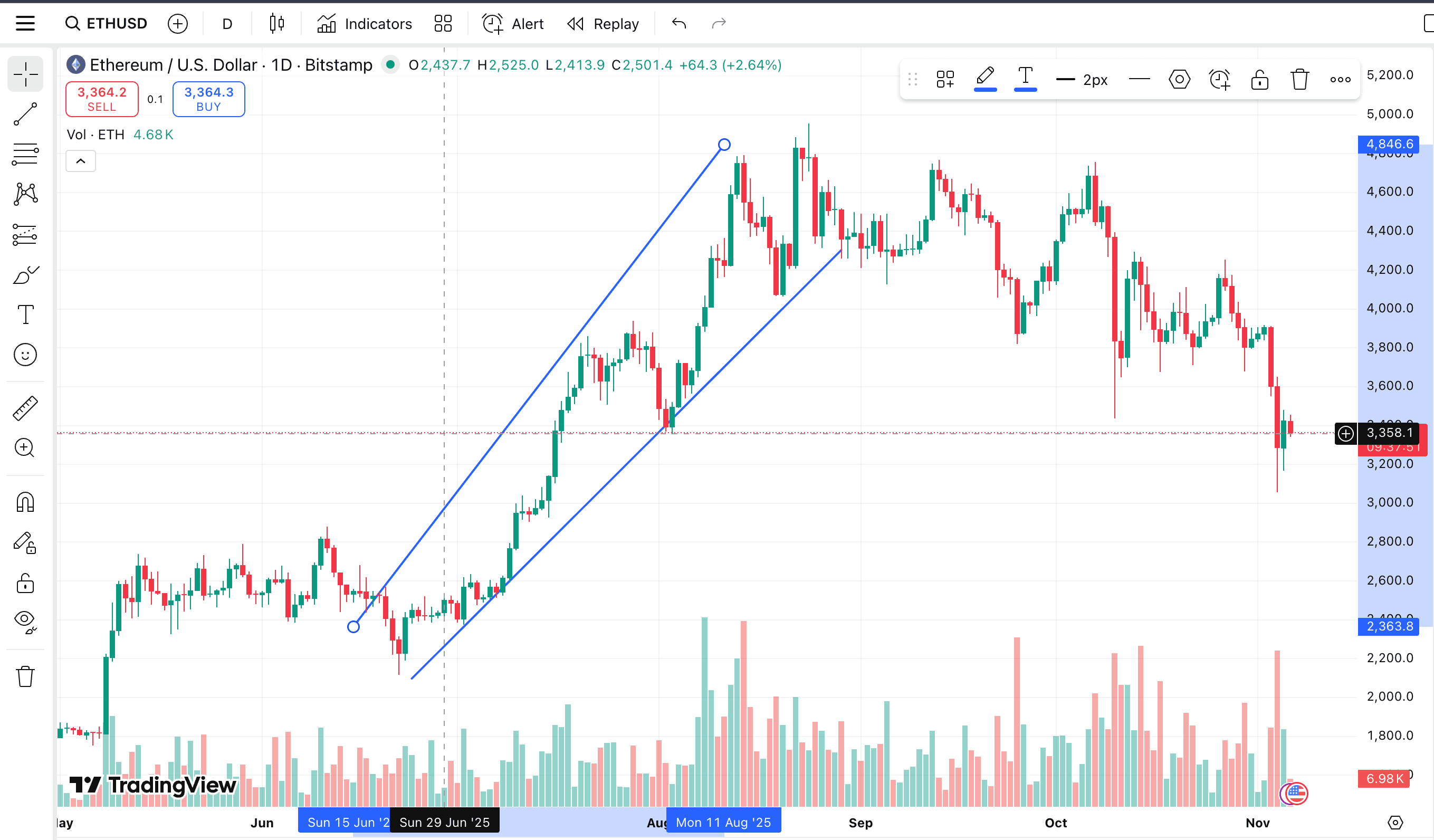

Ethereum’s Steady Rise and Correction Phase
The Ethereum chart above highlights one of the most interesting movements of 2025. Starting around mid-June, ETH entered a strong upward channel, showing consistent buyer confidence. This bullish movement took prices from around the $2,400 level to nearly $4,800 by late August.
Such patterns are common in healthy markets when optimism grows around network developments, ecosystem upgrades, and overall investor sentiment.
Observing the Pullback
After reaching its peak, Ethereum’s price began to experience natural corrections. By October, the chart reflected a downward trend, with prices stabilizing near the $3,300–$3,500 range. These shifts are part of a normal cycle seen in most digital markets.
While short-term traders may find volatility challenging, long-term observers recognize this as part of Ethereum’s organic price rhythm one influenced by both global market conditions and blockchain activity levels.
What Drives Ethereum’s Movements
Ethereum’s growth isn’t driven by price speculation alone. Several underlying factors support its resilience:
- Network Upgrades: Continued improvements in scalability and transaction efficiency through layer-2 solutions.
- Wider Adoption: Developers and enterprises are using Ethereum for decentralized apps (DApps), NFTs, and digital identity projects.
- Market Sentiment: Crypto markets often mirror global investor confidence, macroeconomic trends, and technology innovation cycles.
Volume and Market Activity
The volume bars beneath the chart show steady trading activity. Higher volumes during upward phases usually reflect strong participation, whereas lighter volume during corrections can indicate consolidation.
This balance between buying and selling keeps Ethereum’s price action dynamic, allowing analysts to better understand the balance of demand and supply in real time.
Learning from the Chart
For educational purposes, charts like this one help new readers understand how digital assets behave.
Key takeaways include:
- Prices don’t move in a straight line; they reflect changing emotions and market responses.
- Even in corrections, consistent volume often indicates a stable base of users and developers.
- Observing trends can improve awareness not to predict markets, but to understand them better.
Ethereum’s Broader Outlook
As of late 2025, Ethereum continues to stand as one of the most widely used blockchain networks in the world. It remains central to decentralized finance (DeFi) and digital innovation.
Experts expect its continued evolution, focusing on energy efficiency, security, and global accessibility. While markets will always experience highs and lows, Ethereum’s ecosystem demonstrates the strength of active development and global collaboration.
A Balanced Perspective
Understanding Ethereum’s chart is less about forecasting numbers and more about appreciating how technology, adoption, and sentiment interact. The 2025 movement teaches one important lesson: growth in digital finance requires both curiosity and patience.
By following trends responsibly and learning from market data, users can develop a deeper understanding of blockchain’s real potential beyond just prices.
Disclaimer: This article is for educational purposes only and does not provide financial or investment advice. Readers should conduct their own research or consult certified professionals before making any investment decisions.